Why can two coffees from the same country taste completely different? The answer often lies in their processing method.
In specialty coffee, every detail matters: origin, altitude, botanical variety and terroir. Yet one fundamental factor has a profound influence on the sensory profile in the cup: the way the coffee is processed after harvest. Behind these technical choices lie farming know-how, climatic conditions and local traditions that shape the final character of the coffee.
Among the most widespread methods in specialty coffee, two processes stand out: washed coffee and natural coffee. Although they start from the same fruit — the coffee cherry — these two processing methods lead to very different aromatic profiles. Understanding them helps you read a sensory profile more accurately, and appreciate the work done at origin by the producers.
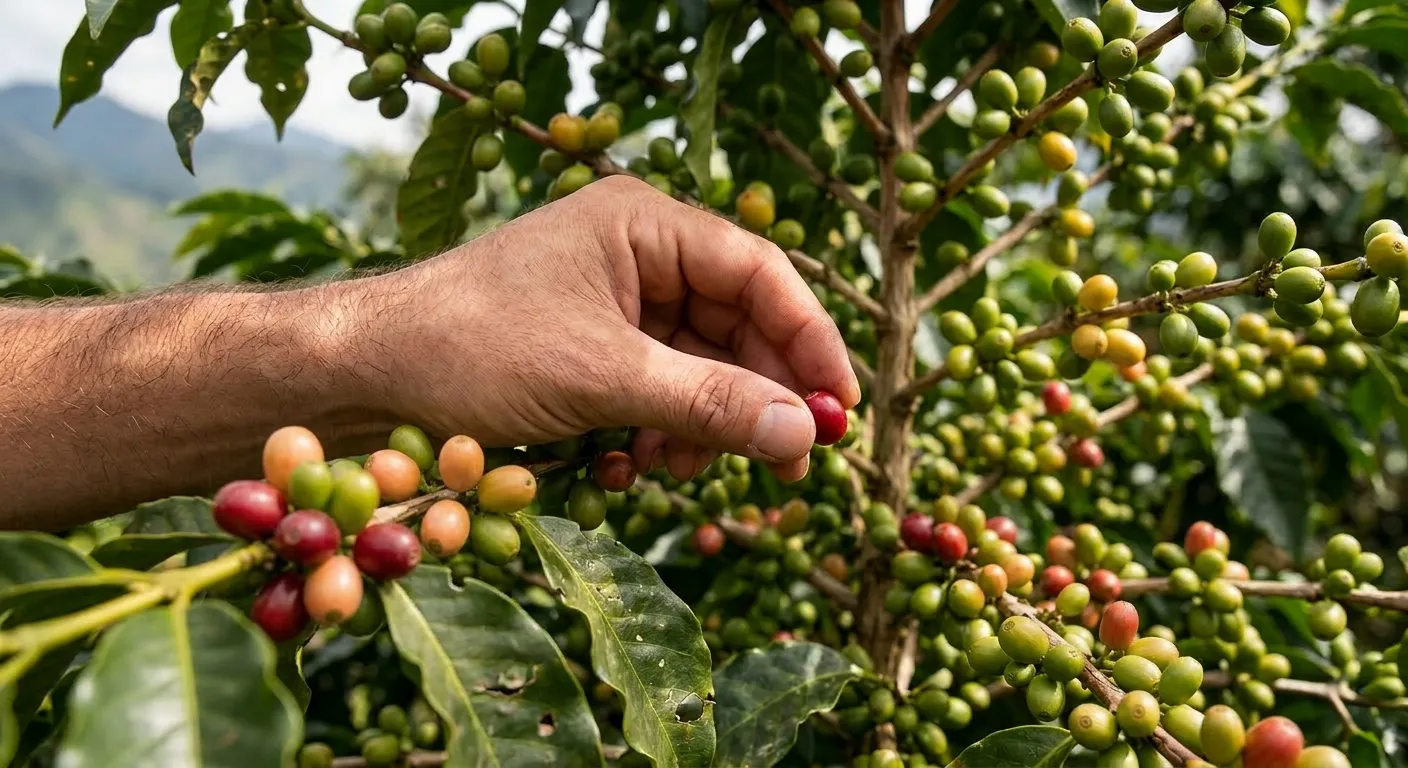
Selective cherry picking
Before we even talk about processing, everything begins with the harvest of the coffee cherries. In specialty coffee, picking is usually done by hand, with close attention paid to the ripeness of the fruit. Depending on the region, altitude and climate, the cherries on a single tree do not all ripen at the same pace. Pickers therefore make several successive passes through the plots to select only the cherries that have reached perfect ripeness. Once harvested, the cherries are quickly taken to processing stations, where different methods — including natural and washed processes — are used to extract and prepare the coffee beans inside the fruit.
The natural process: drying coffee inside its fruit
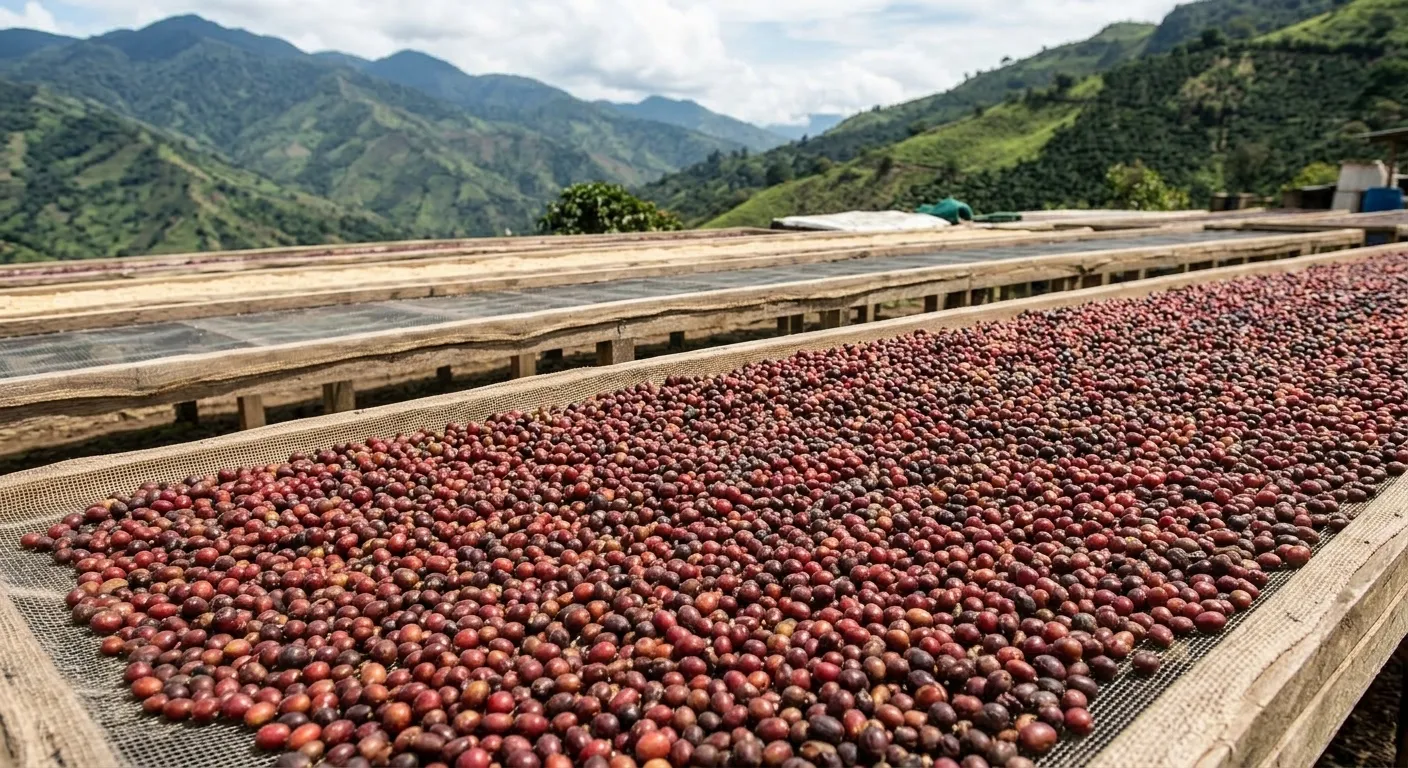
The natural process, also called the dry process, is one of the oldest coffee processing methods. After harvest, the coffee cherries are not opened: they are dried whole, with the pulp and mucilage still surrounding the bean. During this period, the bean remains in contact with the fruit, which gradually influences its aromatic development.
Once sorted, the cherries are usually spread in thin layers on raised African beds or on concrete patios, where they dry slowly in the sun. This drying requires constant attention: the cherries are turned regularly to ensure even dehydration and avoid unwanted fermentation. At night, they are often covered with tarpaulins to protect them from humidity and dew.
Depending on the climate, altitude and organisation of the farm, this drying stage can last between 10 and 30 days. Once the cherries are completely dry and stable, the outer layers of the fruit are removed mechanically during hulling to recover the green coffee bean, ready for the next stages of sorting and export.
Cup profile: Natural coffees are generally known for particularly expressive aromatic profiles. The extended fermentation of the fruit around the bean encourages intense fruity notes, often associated with red fruits, ripe fruits or sometimes jammy aromas. In the cup, these coffees often show pronounced sweetness and a denser body, with an aroma whose intensity and fruity richness can be reminiscent of wine.
The washed process: transforming coffee through fermentation and washing
The washed process, also called the wet method, is one of the most widespread processing methods in specialty coffee, particularly in several Latin American countries. It consists of quickly removing the skin and pulp of the fruit after harvest, in order to work directly with the bean surrounded by a thin, sugary layer called mucilage.
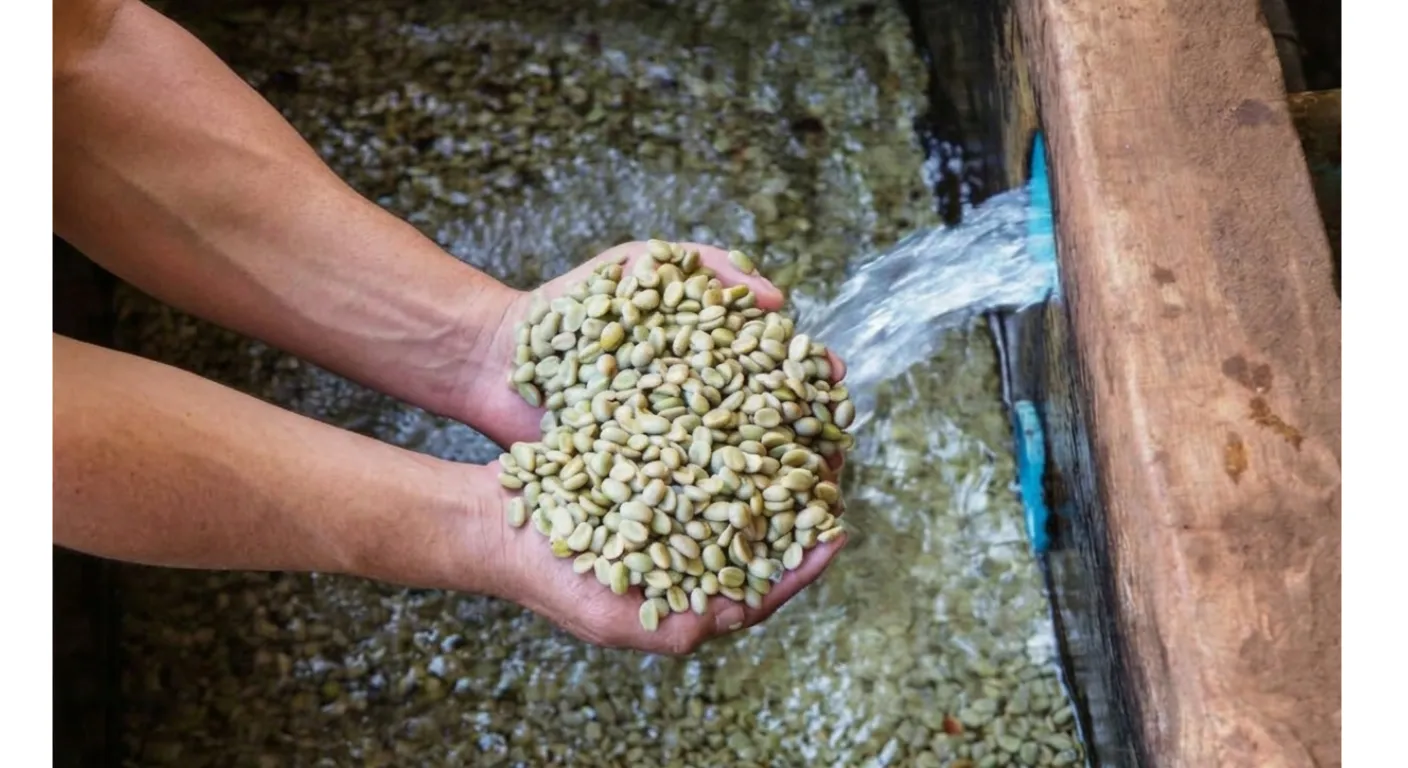
The first step is pulping. Freshly harvested coffee cherries go through a machine called a pulper, which removes the skin and most of the pulp. The beans, still coated in mucilage, are then sent to large tanks filled with water, where they ferment for several hours — usually between 12 and 36 hours, although this can vary with the climate, temperature and practices of each farm.
After fermentation, the beans are washed thoroughly with water in channels or tanks. They are stirred with rakes to remove any remaining pulp and mucilage. This step also allows a first quality sort: the beans that float, often less dense or defective, are removed.
Finally, the clean beans are dried, either on raised African beds, on concrete patios or in mechanical dryers. Drying can take one to three weeks, until the coffee reaches a moisture content of around 10 to 12%, considered optimal for good preservation before export.
Cup profile: Washed coffees are generally appreciated for the clarity and precision of their aromatic profile. Quickly removing the fruit pulp and washing the beans after fermentation produces a cleaner, more defined cup in which the aromas come through with greater precision. On the cupping table, these coffees often show a brighter, more structured acidity, with notes that may evoke citrus, flowers or fresh fruit, and a generally lighter, more elegant body.
The honey process: a balance between fruit and precision
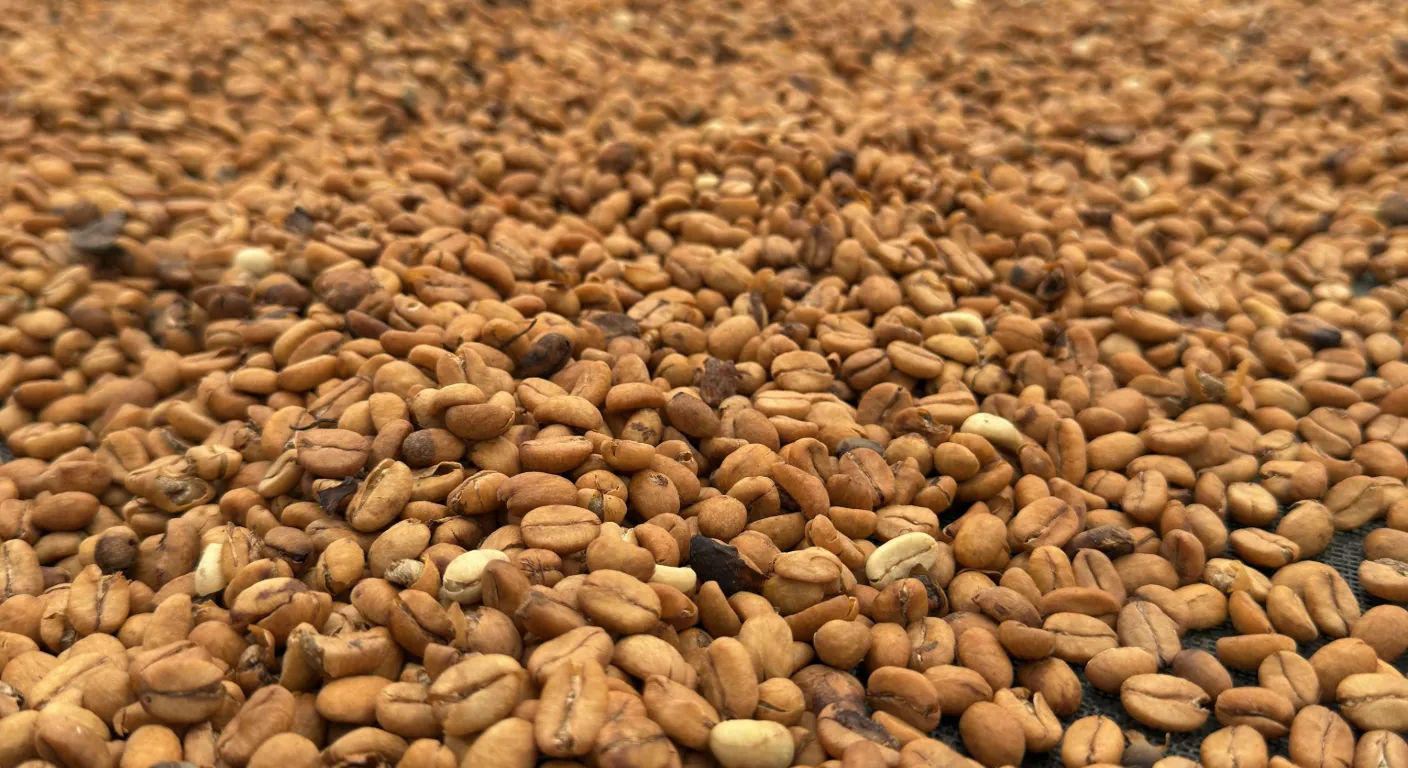
The honey process, sometimes called the semi-washed method, sits halfway between the most widespread processing methods. After harvest, the coffee cherries are pulped, as in the washed method, to remove the skin and part of the pulp. Unlike the washed process, however, the mucilage — the sticky, sugary layer surrounding the bean — is partly kept. The beans are then dried directly in the open air, usually on African beds or patios, for a period of 7 to 25 days.
There are several variations of this process, often identified as white, yellow, red or black honey. These names mainly refer to the amount of mucilage left on the bean and to the drying conditions, which influence the aromatic development of the coffee. In general, the honey process produces coffees with an interesting balance between the clarity of washed coffees and the fruity sweetness of naturals.
Three methods, three expressions of coffee
These processing methods — natural, washed and honey — illustrate the diversity of approaches used in coffee production. Each influences the aromatic structure of the bean and the cup profile in its own way: naturals often stand out for their fruity intensity and generous body, washed coffees for their clarity and bright acidity, while honey coffees often offer a balance of sweetness, roundness and aromatic precision. Understanding these processes helps you appreciate the work done at origin by producers, and see how, long before roasting, part of a coffee’s character is already built through processing.
Ultimately, the processing method plays a decisive role in a coffee’s aromatic expression. Long before roasting or brewing, the choices made on the farm — whether natural, washed or honey — already shape the character of the bean and its potential in the cup. Understanding these methods helps you read a sensory profile more accurately, and appreciate the skill and precision of the producers behind every coffee.